
Economy
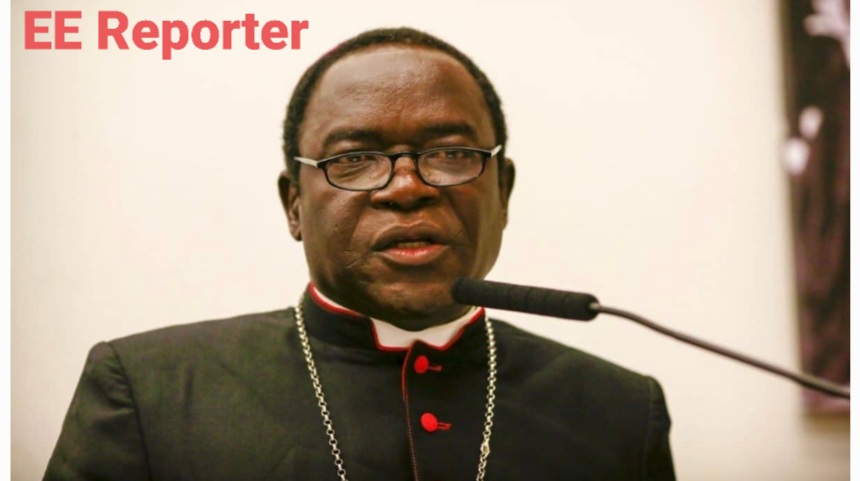
Matthew KUKAH: Why Nigeria Should Not Be Designated Country Of Concern

Matthew KUKAH: Why Nigeria Should Not Be Designated Country Of Concern
Matthew KUKAH: Why Nigeria should not be designated country of concern. 1: I want to thank Aid to the Church in Need for their kind invitation to me to speak in response to the release of their biennial report on, Religious Freedom in the World. The report itself is a huge document of 1248 pages. It covers the state of Religious Freedom around the entire world between Jan 2023 & December 2024. According to the authors, the report reveals a worrying decline that shows more than 5.4 billion living today in countries without religious freedom. It is important to note that this report neither targets a particular country nor a particular faith. It cuts across all faiths and focuses only on the degree to which countries comply with this fundamental human right.
The report identifies authoritarianism, religious extremism, ethno-religious nationalism and organized crime as drivers of religious persecution. To rephrase Leo Tolstoy therefore; Every victim of persecution is persecuted differently.
2: There have been serious concerns nationally and internationally over the deterioration of security matters in Nigeria. The reports have focused on the tragic outburst of violence that has turned huge swaths of the Nigerian landscape into a huge killing field. For over 15 years now, these murderous gangs of Islamicists and jihadist groups have found their way into our country, wreaking havoc, destroying lives and properties, ravaging farmlands and leaving huge parts of the country empty of human existence. Along with this, a culture of uncontrolled banditry, thousands of communities have been destroyed, with thousands of lives lost. The country has witnessed an unacceptable surge in internal displacement in most parts of the north especially around the middle belt states.
3: The biggest challenge for us is the appropriate language to use in describing this tragedy. The reactions have been confusing. Early narratives spoke of farmer-herder clashes, climate change, cattle rustling, outright criminality, etc. With the emergence of Boko Haram and the targeting of Church structures, destruction of schools, hospitals, the kidnapping of priests, the religious, seminarians and other pastoral agents, the murderous gangs invoking the words like, allahu akubar as their anthem of death, there was no other way of speaking of persecution of Christians by these jihadist groups rather than calling them religious persecution targeted at Christians.
Then came the sacking of communities and the occupation of swaths of lands by these terrorist and murderous groups. These groups would later target Muslims who did not believe in their brand of Islam. Today, the floods of blood in Nigeria have no boundaries. This is why the debate over what is happening to us has become so confusing within and outside Nigeria. Although we cannot find the right words, the simple truth is that Nigerians are dying for a living.
4: The confusion over the appropriate language is understandable. The greatest area of concern is how much this tragic turn of events has disrupted years of Nigeria being a colourful tapestry of wonderful human relationships marked by great friendships among our people, across faiths and ethnicities.
For example, I live in Sokoto, right in the womb of Islam. If we were dealing with outright persecution of Christians on grounds of identity, both myself and my small flock would not exist. For example, on September 8th, 2011, the ceremony of my ordination and installation as the Bishop of Sokoto was marked by this exemplary show of collaboration between the Diocese, the state government and the Sultan who personally enthusiastically provided accommodation for my guests during the occasion.
I received the gift of a new Prado Jeep from a Muslim friend of mine who said to me, Bishop; This is my gift to you for your pastoral work in your vast Diocese! On the 30th of September this year, the Sultan himself was physically in the premises of our Secretariat where we commissioned an ICT facility with almost 300 computers for youth and children. This is not to say that there are no problems, but our daily lives should be defined by a better narrative.
.
5: We are therefore not dealing with cases of people who are going around wielding machetes and looking for me to kill because I am a Christian. I travel in my official regalia as Bishop in and out of Sokoto. We carry out our religious services with no molestations. However, what is important is not to create the impression that we have no problems. We do have serious problems but these have escalated because the federal and state governments have, over the years allowed these problems to fester.
The inability of the federal government and its security agencies to end these killings has created the condition for the genocide that has taken over many communities today. By whatever names we choose, the fact is that Nigerians are dying unacceptable deaths across the country. In many cases, they are targeted because of their beliefs but also because of their ethnicity. We are in the cusp of a weak state with clear lack of capacity to arrest the descent into anarchy.
6: Nigerians feel vulnerable and unprotected irrespective of their faiths, ethnicity or social classes.
A significant part of our social life has literally collapsed as many citizens now fear large gatherings for social events or prayer. It is important to restate that things were never really always like this. The last 8 years of the Buhari administration marked the worst phase in the history of interfaith relations in Nigeria, especially relating to violence against Christians and their exclusion from power. That administration gave oxygen to jihadists by virtue of its policies which overtly favoured Islam and northern Nigeria.
The President himself was a Muslim, ensured that the Senate President, the Speaker, the Deputy Speaker, the entire leadership of security was entrusted to the hands of only Muslims, almost all from the north.
This was a departure from the sensibilities that had characterized power sharing in Nigeria. I argued then that in reality, the difference between President Buhari and the Jihadists was that he was using a pen while the jihadists were using weapons of violence against Christians. I also stated that under Buhari, to gain power, it was more important to be a northern Muslim than to be a citizen of Nigeria.
7: Today, sadly, Nigeria is still bleeding. However, I see a window of opportunity that we could use to restore harmony among our people. The Report acknowledged that the First Family is an example of what should give hope in Nigeria; with the President being a Muslim and his wife being a Pastor in a Pentecostal Church! The President and the Vice President are Muslims, yet Christians have not felt alienated. The Chief of General Staff of the Nigerian Army, the Director of State Security Services among others are Christians. The President just appointed a Christian as the leader of the ruling Party. He also has appointed a Christian as the Chairman of the Independent National Electoral Commission, INEC.
These are confidence building measures aimed at inspiring confidence in the citizens about having a sense of belonging. Our situation is far from perfect. We are still in a bad place, but there are signs of a government willing to listen. In response to the tragedy of the horrible killings in Yelwata, Benue state, the President physically paid a visit and had interactive sessions with the victims and the state government. It also pledged financial assistance to the victims. Such actions are different from the Buhari period where the President largely simply looked the other way without empathy.
8: The report indicates some decline in terrorist attacks quoting the Global Terrorism Index Report for2025 which states that terrorist attacks in Nigeria declined by 37% in 2024. However, the report still notes that; During the reporting period, innumerable attacks in Nigeria were documented in which the victims’ religious affiliation played a contributing or decisive role.
Religious identity, particularly Christian identity in the northern states, matters intensely because it renders Christians (and moderate Muslims) particularly vulnerable to violence, persecution, and displacement….Religious freedom in Nigeria is under grave threat, principally due to legal measures that support discrimination against Christians in the northern states, as well as severe and relentless atrocities committed throughout the country. It is therefore deeply discouraging to note that prospects for religious freedom in Africa’s most populous nation remain extremely grim.
8: This Report is not meant to make anyone side happy or sad. It is a wake-up call for Nigeria. The report offers Nigeria and opportunity to stand in the mirror and decide how it wants to create a country of common citizenship. President Bola Tinubu ordered Nigeria to return to its old national anthem, emphasizing that one of the stanzas says, we want to; build a country where no one is oppressed. Now is the time to live up to these principles. There is an urgent need to bring all laws, I am mean all, under the purview of the Constitution of the federal republic of Nigeria.
9: For years, the agents of state have stood by as individuals took the law into their hands, destroying churches and k1lling Christians over the last forty years, k1lling innocent citizens of both faiths on grounds of blasphemy laws with the Hisbah groups seeking to enforce Islamic laws by the backdoor, all with no repercussion. The dubious decision by 12 northern states to adopt Sharia law in a Democracy in 2000, opened the door to Islamicists who saw this as a sign that Islam was on the ascendancy.
Things must change. The President should go to court to have the adoption of the Sharia law by the 12 northern states declared unconstitutional as the only way to arrest the tendency to mob justice which continues to claim innocent lives of citizens such as Deborah Samuel (Sokoto), Bridget Agbahime (Kano). The secular state anticipated by the Constitution must be enforced.
10: In the experiences of Christian minorities in northern Nigeria, what constitutes persecution is not necessarily just violence. It is also the perceived denial of their rights to access to places of worship in public institutions, refusal of state authorities to allocate lands for the building of churches, not reconstructing destroyed churches when fanatics raze them down, denial of employment opportunities and promotion in public institutions, lack of access to religious education for Christian children in public schools etc. The right to what constitutes persecution belongs to the victim. It is left for the state to gauge these claims against the Constitution.
11: Finally, I want once again to thank ACIN for their tireless work towards the restoration of human dignity in the fulfilment of God’s gift to humanity, the right for all to worship him without let or hindrance.
I believe that over the years, Nigeria has sinned and fallen short. Under the Buhari administration, its egregious persecution of Christians was visible. I accepted and encouraged the designation of Nigeria as a Country of Concern. In their statement dated December 11th, 2020, (a day after the Human Rights Day) the Trump administration said: Governments whose leaders have allowed perpetrators of vicious persecution to act with impunity pose a national security threat to the United States and the world.
12: I do believe that today, acts of impunity still persist, but it is my view that re-designating Nigeria a Country of Concern will hurt the initiatives we are working on with the current government to collectively resolve the nagging problems of first, the persecution of Christians and of course the larger issues of ending the mindless killings of our citizens. Designating my country, Nigeria, a Country of Concern will only make our work in the area of dialogue among religious leaders in our country and elsewhere with the Nigerian state even harder.
Nigerians On The Cross Of Insecurity
It will only increase tensions, sow doubt, open windows of suspicion and fear and simply allow the criminals and perpetrators of violence to exploit. What Nigeria needs now is a more vigilance by the organisations such as the ACIN and civil society groups to continue to press for change and to deliberately work to end impunity.
12: I believe that the Obama and Biden administrations were complicit in the way they handled the fight against Boko Haram under the Presidency of Goodluck Jonathan. The country was already making progress. The decision to block Nigeria’s access to the required weapons to end this violence by the Obama administration and their drive to impose President Buhari on Nigeria pushed back this fight.
I therefore appeal President, Donald Trump who is already working hard to show that a peaceful world is possible with his historic achievement in the Middle East to lift the ban and allow Nigeria access the military tools it requires to free our country from the stranglehold of these evil men. I believe this will set us on a course to end the violence that extremist groups and merchants of death have inflicted on us.
13: Thankfully, in his new Encyclical, Dilexi Te, the holy father, Pope Leo has said: I am sure that preferential option for the poor is the source of extraordinary renewal both for Church and society. Happily, our President, Bola Ahmed Tinubu sent a delegation of the Catholic Bishops for the burial of our beloved holy father, Pope Francis. He personally took the historic decision to be at the inauguration of the holy father, Pope Leo, X1V.
We believe that despite our challenges, there is a window of opportunity to the religious leaders in Nigeria to map out the best strategies towards national harmony and integration. With the historic developments in the Middle East coming in this year of Hope, the world has a chance to reverse the vicious hold of all forms of religious extremism threatening a peaceful world order.
Nigeria, a country of well over 200 million people of faith can make a great contribution towards this quest for world peace if we can rid our country of the virus of religious extremism.
We should be supported and encouraged in this effort and not punished. On our part, the Nigerian government must urgently design a robust template to restore confidence in our country by taking the concerns expressed in this Report in good faith. Thank you very much.
~ Kukah is the Bishop, Catholic Diocese of Sokoto, Nigeria, and he delivered the speech at the Augustinianum Hall, on October 21, 2021, Vatican City.

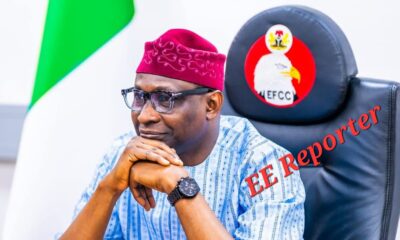






EFCC Arraigns Former SKye Bank Chairman, Tunde Ayeni For N15.6b Fraud
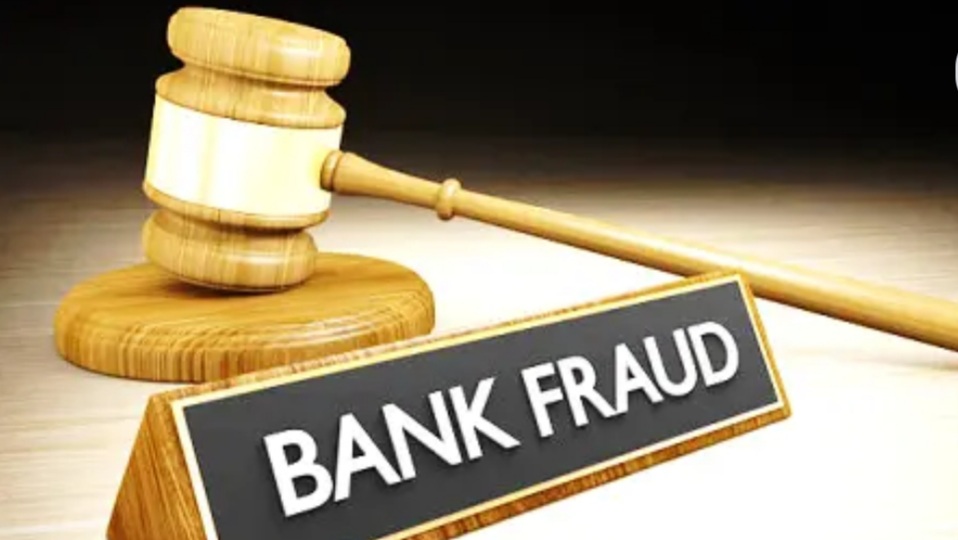
The Economic and Financial Crimes Commission, EFCC, on Monday, May 4, 2026, arraigned a former Chairman, Board of Directors of the defunct Skye Bank Plc, Tunde Ayeni before Justice Jude Onwuzuruike of the Federal Capital Territory, FCT, High Court, Apo, Abuja.
Ayeni was arraigned on a 17-count charge bordering on criminal breach of trust, misappropriation and conversion of investors’ funds to the tune N15,665,085,429 (Fifteen Billion, Six hundred and Sixty five Million, Eighty five thousand, Four Hundred and Twenty-nine Naira (N15,665,085,429).
Prosecution counsel E.E. Iheanacho, SAN, informed the court that the matter was slated for arraignment and prosecution ready for trial.
“We have before the court 17-count charge dated April 28, 2026, we humbly apply that the charge be read to the defendant”, he said.
Eereporter.com
Count three of the charge reads: “That you, Tunde Ayeni, whilst being the Chairman, Board of Directors of the defunct Skye Bank Plc between 21st of October, 2014 and 19th November, 2014 at Abuja within the jurisdiction of this Honourable Court and having dominion over depositors funds domiciled in the defunct Skye bank Plc’s Suspense Account, committed criminal breach of trust when you dishonestly misappropriated the aggregate sum of Three billion, Two hundred and One million, Five Hundred and Thirty Five Thousand, Four Hundred and Twenty Nine Naira, Forty two kobo(N3,201,535,429.42) by transferring same to Misa Limited’s account No: 1011295717 and 1011295718 domiciled with Zenith Bank in Violation of the Prudential Guidelines and other regulations and thereby committed an offence contrary to Section 311 of the Penal Code and punishable under Section 312 of the same Act.
Count five of the charge reads: “That you Tunde Ayeni, whilst being the Chairman, Board of Directors of the Defunct Skye Bank Plc on or about 27th November, 2014, at Abuja within the Jurisdiction of this Honourable Court and having dominion over depositors’ funds domiciled in the defunct Skye bank Plc’s Suspense Account, committed criminal breach of trust when you dishonestly misappropriated the sum of Five Billion, Seventy Eight million, Five hundred and Fifty thousand Naira(N5, 078,550,000) by transferring same to Union Registrar Limited’s Account No: 0003490559 domiciled with Union Bank in violation of the Prudential Guidelines and other Regulations and thereby Committed an offence contrary to Section 311 of the Penal Code and Punishable under Section 312 of same Act.”
Fraud
Ayeni pleaded “not guilty” to the charges when they were read to him.
In view of his “not guilty” plea, Iheanacho prayed the court for a trial date and urged the court to remand the defendant in a Correctional Centre.
Defence counsel, Ahmed Raji Bashir, SAN, informed the court that the charge was given to the defendant on a public holiday adding that he considered it imperative to inform the court. He also prayed the court to release the defendant to him or return him to the custody of the EFCC.
Justice Onwuzuruike adjourned the matter to May 13, 2026, for hearing of the bail application, while the defendant was remanded at the Kuje Correctional Centre pending determination of bail application.
Economy
World Press Freedom Day: FG Calls For Collaboration To Address Disinformation, Misinformation
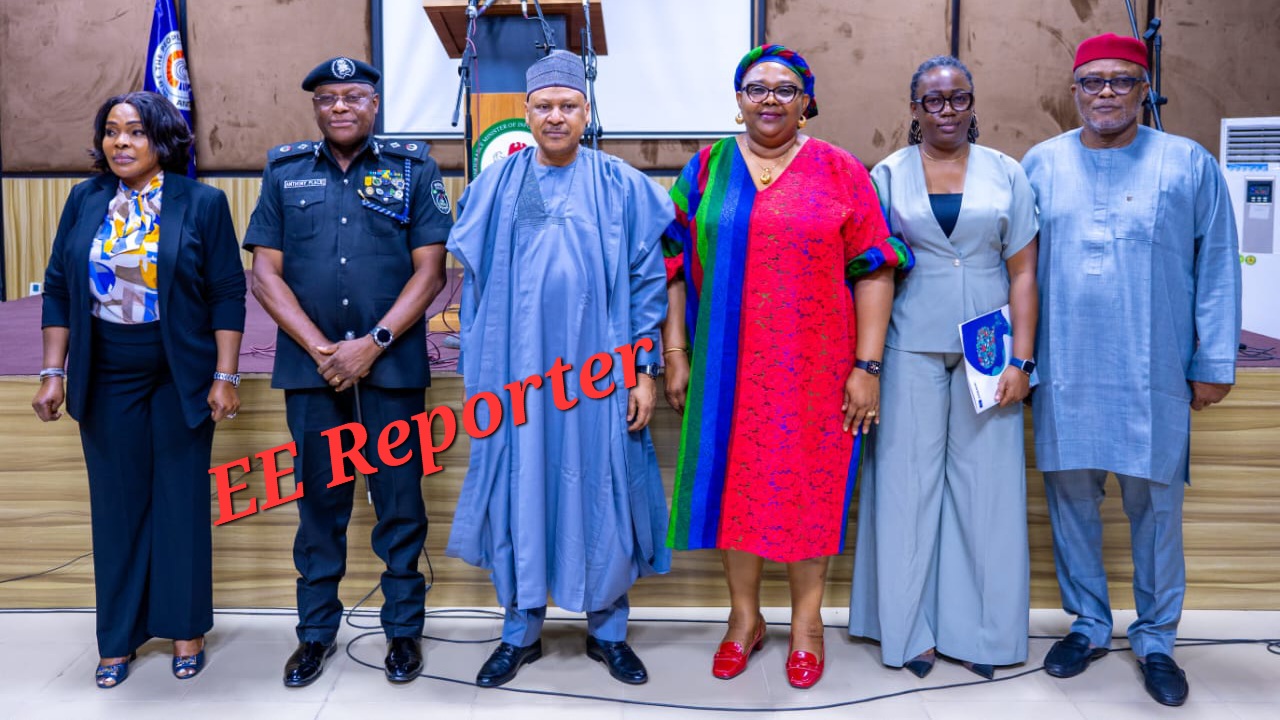
World Press Freedom Day: FG Calls For Collaboration To Address Disinformation, Misinformation
The Federal Government has called for stronger collaboration among the media, government institutions, and other stakeholders to address the growing threat of disinformation and misinformation, stressing that collective action is essential to protect public trust and national stability. The Honourable Minister of Information and National Orientation, Mohammed Idris, made this known on Monday in Abuja at the 2026 World Press Freedom Day commemoration held at Radio House.
“This administration has prioritised collaboration with media stakeholders and international partners to promote responsible journalism, counter disinformation and misinformation,” said the Minister.
He described press freedom as a fundamental right guaranteed under the Constitution, noting that the Federal Government remains fully committed to its protection. “The Federal Government fully recognises press freedom as a fundamental right and remains committed to fostering an environment where the media can operate freely, safely, and responsibly, in accordance with democratic principles and the rule of law,” he stated.
Idris noted that the Federal Government, under the leadership of President Bola Ahmed Tinubu, has taken deliberate steps to strengthen transparency and access to information through sustained media engagement, implementation of the Freedom of Information Act, and investment in public communication platforms.
Eereporter.com
He further pointed to Nigeria’s partnership with UNESCO in establishing the International Media and Information Literacy Institute (IMILI) in Abuja as a key step towards building a more informed and discerning public. “This pioneering initiative reflects our commitment to strengthening media and information literacy, empowering citizens to engage with information critically, and promoting responsible communication in the digital age.”
The Minister urged journalists to uphold professionalism, fairness, and ethical standards in their work, stressing that press freedom must go hand in hand with responsibility. “The true test of press freedom lies not in our declarations, but in our actions, how safely journalists can do their work, how truthfully information is shared, and how responsibly it is consumed,” he said.
Earlier in her welcome address, the Permanent Secretary of the Federal Ministry of Information and National Orientation, Dr. Binyerem Ukaire, described the event as a critical platform for strengthening collaboration across institutions.
“This gathering reflects our shared commitment to strengthening press freedom and fostering a more informed and inclusive society. It provides an opportunity for constructive engagement on how best to advance a media environment that is both free and responsible,” she said.
World Press Freedom Day
Ukaire emphasised the need for coordinated responses to the challenges posed by the evolving information ecosystem, particularly the spread of misinformation. “The expansion of digital platforms has introduced new complexities that require coordinated institutional responses, especially in addressing misinformation and strengthening public trust,” she noted.
She added that the Ministry remains committed to facilitating dialogue, strengthening partnerships, and promoting professionalism within the media space.
The Federal Government reiterated its commitment to working with the media, civil society, and international partners to build a resilient information system that supports democratic governance, national unity, and sustainable development.
The event was attended by the Inspector General of Police, represented by FPRO, DCP Anthony Okon Placid, mni, mnipr; the Director-General of the Department of State Services, represented by Director of Protocol M. O. Chukwuka, fsi; Executive Secretary, Nigerian Press Council, Dr Dilli Ezughah; Head of UNESCO Abuja Office, represented by the Head of Communication and Information Sector, Ms Yachat Nuhu.
Rabiu Ibrahim
Special Assistant (Media) to the Honourable Minister of Information and National Orientation
Monday, May 4, 2026

NNPC, Chinese Firms Sign MoU Towards Restart, Expansion Of Warri, Port Harcourt Refineries
The NNPC Ltd has signed a Memorandum of Understanding (MoU) with two Chinese companies, Sanjiang Chemical Company Limited and Xinganchen (Fuzhou) Industrial Park Operation and Management Co. Ltd, for collaboration through a potential Technical Equity Partnership in support of the completion and operation of the Port Harcourt and Warri Refineries.
The MoU was signed by the Group CEO, NNPC Ltd, Engr. Bashir Bayo Ojulari; Chairman, Sanjiang Chemical Company, Guan Jianzhong and Chairman of Xinganchen (Fuzhou) Industrial Park Operation and Management Co. Ltd, Bill Bi, in Jiaxing City, China, on Thursday, April 30, 2026.
Eereporter.com
The potential framework would cover completion of outstanding work at the two refineries, together with operating and maintaining both facilities to achieve best-in-class, sustainable performance. Planned expansion and upgrades would elevate both facilities to cleaner, more profitable product standards.
The potential collaboration also contemplates expanding the refineries’ petrochemical capacities and harnessing gas and downstream opportunities through the development of co-located, gas-based industrial hubs.
Speaking shortly after signing the dotted lines, the GCEO NNPC Ltd, Engr. Bashir Bayo Ojulari, described the MoU execution as a significant milestone, following more than six months of concerted engagement between the technical and management teams of NNPC and the two Chinese partners.
“All parties recognise mutually beneficial opportunities for the development and long-term sustainable profitability of NNPC’s refining assets in Nigeria, and the collective weight required for success,” Ojulari noted.

NNPC
The GCEO further stated that the MoU is a significant step on the journey towards identifying potential technical equity partner(s) to restart and expand NNPC’s refineries, and to explore opportunities in co-located petrochemicals and gas-based industries.
The MoU reflects the parties’ shared intent to progress discussions in good faith, with any definitive arrangements to follow in due course and subject to customary approvals.
-
 Crime12 months ago
Kogi Assembly Considers Law To Regulate Rent, Establish Control Board: Tenancy Law
-
 News1 year ago
Atiku Reveals Why He Failed To Pick Wike As Running Mate In 2023
-
 Akwa Ibom1 year ago
The Apostolic Church Gets New Territorial Chairman, Exco
-

 Crime1 year ago
Federal High Court Jails 2 For Vandalizing Transformer, Telecom Mast In Kogi
-
 News1 year ago
The Apostolic Church Gets New National President, Executive
-
 Akwa Ibom1 year ago
Umo Eno Commences Payment Of 80,000 Naira Minimum Wage With Arrears
-
 News1 year ago
Senator Natasha Returns To Senate With Husband Amid Seat Dispute
-
 Economy12 months ago
Kiyosaki: Is Tinubu’s Government Afraid Of Ibrahim Traore?