
Judiciary
Azu Ishiekwene: Rivers Emergency Rule: A different view point

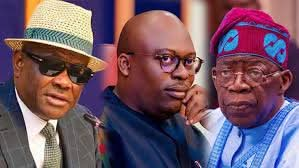
Azu Ishiekwene: Rivers Emergency Rule: A different view point
Those opposed to the proclamation should say how to leave Fubara in place and extract the water of peace from the coconut of Rivers without breaking the shell on the head of the people.
President Bola Ahmed Tinubu’s proclamation of emergency rule in Rivers State on Tuesday surprised me for reasons different from those for which he has been severely criticised.
The mildest criticism is that Tinubu’s failure to call the Minister of the Federal Capital Territory, Nyesom Wike, to order was responsible for the crisis.
The more severe criticisms range from accusations that the president has subverted constitutional rule to charges of potential destabilisation at the behest of Wike.
A common point of agreement is that a civilian president should never have to declare emergency rule. That is the ideal. But Rivers State before Tuesday presented a dire and complicated situation that stretched idealism to its elastic limits.
Chaos in slow motion
It’s convenient, especially for those who promoted and profited from the crisis, to pretend otherwise. Still, after the 27 state lawmakers loyal to Wike issued an impeachment notice, the outcome, if Governor Siminalayi Fubara had been impeached, might have been far worse for the state than can be contemplated under emergency rule.
The proclamation was an unsolicited stitch in time.
If oil pipelines were already being blown up and militants deploying as the impeachment notice reached Fubara, what would have happened if the process had carried through?
Rivers State has been chaos in slow motion for nearly two years, the only thriving business in the state being the politics of those who support Fubara and those who are against Wike.
The Supreme Court’s judgment invalidated the budget passed by Fubara and nullified the local government election.
It affirmed the position of the 27 lawmakers, making Fubara’s government a lame duck. Emergency rule saved the governor from gunpoint, created a pause for the people to get their lives back, and made room for Wike and Fubara to stop and reflect. It’s a messy situation, but the counterfactual could have been worse.
Between Wike and Fubara
Popular media has framed Fubara as the victim of a grasping, unforgiving godfather, which suits his comportment.
But during this inconvenient pause, it might be helpful for the governor to reflect on what he might have done differently, something that pressure by those egging him on for their narrow, selfish reasons might not have given him the space to do.
In the public imagination, control of the state’s “political structure” is at the heart of the dispute between Fubara and Wike. Whether that is so, whether it’s about who the “authentic” party leader is, or it is more than what the public knows, Fubara and Wike know. We can only guess. But they both know.
Open war
The open war started after Fubara’s swearing-in when the governor wanted to install his candidate as speaker in the House of Assembly but failed.
What was the point of demolishing the State House of Assembly complex built for hundreds of millions of naira with taxpayers’ money in December 2023 simply on the suspicion that the lawmakers were planning to impeach him there?
Why did the governor think it was right to convene four of 31 lawmakers in his office to present the appropriation bill and then go on to implement it?
And why, after the peace deal brokered in Abuja, was it difficult for him to be his own man, free himself as the hostage of opportunistic local politicians and self-appointed opinion leaders and implement the decisions reached instead of caving into busybodies in the Peoples Democratic Party whose primary interest is to continue the unfinished war of the 2022 Convention by other means?
Atiku No. 2
The PDP leadership and their cousins in the Labour Party have never forgiven Wike for supporting Tinubu’s election. They have been quite loud in condemning the state of emergency.
That’s their job as opposition. However, if the PDP is letting its testosterone rush get into its head and impair memory, we may need to remind the party how we got here.
Former Vice-President Atiku Abubakar has been quite vocal in condemning emergency rule in Rivers State. In his earnestness, he has forgotten that the government in which he was the number two man had a shambolic record of infidelity to constitutional rule. And that is saying it nicely.
One can argue that then-President Olusegun Obasanjo’s proclamation of emergency rule in Plateau State in 2004, though controversial, was inevitable because of the horrific deaths caused by the sectarian violence, which led to reprisals in other states. Yet, former Governor Joshua Dariye’s suspected links to the crisis made his suspension inevitable.
Bayelsa playbook
Atiku could not have forgotten that when his boss did it again in Ekiti State two years later, it was mainly to facilitate Obasanjo’s hijack of the state for his political convenience after lawmakers claimed to have impeached the governor. Fayose had become a thorn in his side, and he vowed to remove him by all means, fair and foul.
Atiku may argue that he had been estranged from the government then and could not bear vicarious liability. However, he remained a part of the government until the end and must endure its glory and shame.
Or perhaps he would have preferred the impeachment of Fubara from Obasanjo’s Bayelsa playbook? In that case, instead of an emergency rule, Tinubu would have provided a haven where the majority 27 lawmakers would have met under heavy security protection to remove the governor, as Obasanjo did under slightly different circumstances, in the case of former Governor Diepreye Alamieyeseigha.
Amaechi’s forgotten diary
Former Governor Rotimi Amaechi, a longstanding foe of Wike, also weighed in, condemning the “power grab’s illegality.”
He has a right to intervene and speak his mind. However, since he called the proclamation “an affront” to the rule of law and a power grab, it might be helpful to remind him of a typical, but by no means isolated, example from his record as governor.
In 2013, when the position of chief judge in Rivers was vacant, Amaechi appointed and swore in the president of the Customary Court of Appeal, Justice Peter Agumagu, against decency and the provisions of law.
He joined issues with the National Judicial Commission, which was at its wit’s end to restrain him and keep him on the path of common sense. The state judiciary reeled under Amaechi’s blatant affront for one year, something he now conveniently forgets.
APC Chieftain Gives Tinubu 7-Day Ultimatum
Apples and oranges
Parallels have been drawn between the state of emergency in Rivers and the one in 1962 during the Western Region crisis, especially as the latter was believed to have led the country down the slippery slope that eventually ended in the removal of the Tafawa Balewa government and the Civil War.
The underlying currents may be similar – local politics gone rogue – but the consequences or potential consequences are not.
Constitutional lawyers can debate the legal triggers because of the lack of clarity in Section 305 of the 1999 Constitution, compared with the 1960 Constitution, a pre-Republican document that gave the prime minister more expansive powers.
While the emergency rule in the Western Region was mainly an opportunistic intervention by the federal government to undermine the Obafemi Awolowo-led opposition, the emergency in Rivers was an inevitable step to prevent a potential descent into chaos, where the governor was not an innocent bystander.
Water in the coconut
Since 1999, two administrations – Muhammadu Buhari’s and Umaru Yar’Adua’s being the only exceptions – have proclaimed emergency rule.
Apart from 2013, when then-President Goodluck Jonathan left the governors of the three affected states in place because they had no link to the crises in their states, complicity has affected the scope of the application of emergency rule.
When Obasanjo threatened an emergency in Lagos, Tinubu said it was unacceptable because he was doing his best as governor to tackle the sectarian clashes in a small part of the state then. In Rivers, the governor is a part of the problem.
Those opposed to the proclamation should say how to leave Fubara in place and extract the water of peace from the coconut of Rivers without breaking the shell on the head of the people.
Ishiekwene is Editor-in-Chief of LEADERSHIP and author of the book Writing for Media and Monetising It.






Enugu: EFCC Quizzes Trader For Alleged Dealing In Currency Counterfeiting
Enugu: EFCC Quizzes Trader for alleged dealing in currency counterfeiting. Operatives of the Enugu Zonal Directorate of the Economic and Financial Crimes Commission, EFCC, have commenced investigation into the activities of a 31- year old trader, Oduburu Lucy Oluchi also known as Eze Chiamaka Lucy caught with fake currency to the tune of N192, 000. 00 (One Hundred and Ninety-two Thousand Naira).
Oluchi was arrested on December 23, 2025 at Eke Nibo market in Awka South Local Government Area of Anambra State by her fellow traders, while attempting to purchase goods in the market.
Upon her arrest, she was handed over to Agunechemba Quasi Security outfit (Vigilante) who handed her over to the Department of State Services.
Receiving the suspect from the DSS on December 29, 2025, the Commission discovered that she had in her possession fake One Thousand Naira notes totaling the said sum, with six different serial numbers.

EFCC
Twenty-five (25) notes have serial number A/33 334233; Thirty (30) notes have serial number B/33 334432; Fifty-one (51) notes have serial number A/83 353504; Forty-three (43) notes have serial number A/29 894433; Forty-two (42) notes have serial number A/29 894434 while One (1) note has serial number A29/ 898248.
The offence is contrary to Section 151 of the Criminal Code and Sections 4 and 5 of the Counterfeit Currency (Special Provisions) Act.
The suspect will be charged to court as soon as investigations are concluded.
Nnamdi Kanu Says There’s No Charge Against Him, Refuses To Open Defence
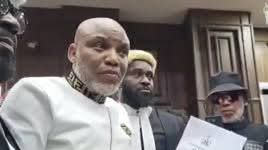
Nnamdi Kanu says there’s no charge against him, refuses to open defence. Nnamdi Kanu, leader of the Indigenous People of Biafra (IPOB), has refused to open his defence in the terrorism charge filed against him.
At the resumed proceedings on Monday, Kanu who has opted to defend himself after sacking his team of lawyers, said he has gone through his case file and there is no charge against him.
“Join me in praising God. I have gone through my case file, and there is no charge against me,” he started.
Nnamdi Kanu
“There is no extant law in this country upon which the prosecution can predicate the charges against me. If there’s any, let my Lord read it out to me.
“So, I should not enter any defence in a charge that does not exist under any law in Nigeria. I urge you to release me today or grant me bail.”
Economy
Atiku Slams Tinubu Over ‘Reckless’ Presidential Pardon Says “It Undermines Justice, Emboldens Criminality”
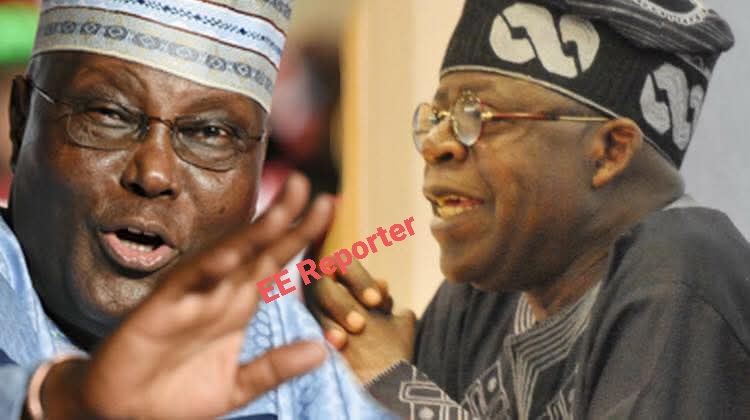
Atiku Slams Tinubu Over ‘Reckless’ Presidential Pardon Says “It Undermines Justice, Emboldens Criminality”
Atiku slams Tinubu over ‘reckless’ presidential pardon says “It undermines justice, emboldens criminality”. Former Vice-President Atiku Abubakar has criticised President Bola Tinubu for what he described as the “reckless and morally indefensible” use of presidential pardon.
In a statement on Sunday, Abubakar said the latest exercise of clemency by Tinubu “undermines justice and emboldens criminality,” arguing that it betrays the spirit of the constitutional power it is meant to represent.
“The recent announcement of a presidential pardon by President Bola Ahmed Tinubu has, as expected, provoked outrage across the nation,” Abubakar said.
“Ordinarily, the power of presidential pardon is a solemn prerogative, a moral and constitutional instrument designed to temper justice with mercy and to underscore the humanity of the state.
“When properly exercised, it elevates justice and strengthens public faith in governance. Regrettably, the latest pardon issued by the Tinubu administration has done the very opposite.”
He said granting clemency to individuals convicted of serious crimes such as drug trafficking, kidnapping, murder, and corruption “not only diminishes the sanctity of justice but also sends a dangerous signal to the public and the international community about the values this government upholds”.
“At a time when Nigeria continues to reel under the weight of insecurity, moral decay, and a surge in drug-related offences, it is both shocking and indefensible that the presidency would prioritise clemency for those whose actions have directly undermined national stability and social order,” he added.
The former vice-president said it is “particularly worrisome” that nearly a third of those pardoned were convicted for drug-related offences.
“Particularly worrisome is the revelation that 29.2 percent of those pardoned were convicted for drug-related crimes at a time when our youth are being destroyed by narcotics, and our nation is still struggling to cleanse its image from the global stain of drug offences,” he said.
“Even more disturbing is the moral irony that this act of clemency is coming from a president whose own past remains clouded by unresolved and unexplained issues relating to the forfeiture of thousands of dollars to the United States government over drug-related investigations.
“It is, therefore, no surprise that this administration continues to demonstrate a worrying tolerance for individuals associated with criminal enterprise.”
According to him, a presidential pardon is meant to symbolise “restitution and moral reform,” but Tinubu’s action “has become a mockery of the criminal justice system, an affront to victims, a demoralisation of law enforcement, and a grave injury to the conscience of the nation.”
“Clemency must never be confused with complicity,” Atiku said, adding that “when a government begins to absolve offenders of the very crimes it claims to be fighting, it erodes the moral authority of leadership and emboldens lawlessness,” the former vice-president.
“Nigeria deserves a leadership that upholds justice, not one that trivialises it.”
Tinubu, Atiku
Recently, 175 persons received a presidential pardon following the approval of the national council of state.
Among the 175 beneficiaries are Herbert Macaulay, one of Nigeria’s foremost nationalists; Farouk Lawan, a former member of the house of representatives; Mamman Vatsa, a major general and poet executed in 1986 over alleged treason; and Maryam Sanda, who was sentenced to death for killing her husband in 2017.
Drug offenders, illegal miners, white-collar convicts, and foreigners are also among the recipients of the presidential pardon.
In a statement on Saturday, Bayo Onanuga, special adviser to the president on information and strategy, said Tinubu granted clemency to most of the convicts based on reports that they had shown remorse and good conduct.
-
 Crime11 months ago
Kogi Assembly Considers Law To Regulate Rent, Establish Control Board: Tenancy Law
-
 News12 months ago
Atiku Reveals Why He Failed To Pick Wike As Running Mate In 2023
-
 Akwa Ibom1 year ago
The Apostolic Church Gets New Territorial Chairman, Exco
-

 Crime1 year ago
Federal High Court Jails 2 For Vandalizing Transformer, Telecom Mast In Kogi
-
 News1 year ago
The Apostolic Church Gets New National President, Executive
-
 Akwa Ibom1 year ago
Umo Eno Commences Payment Of 80,000 Naira Minimum Wage With Arrears
-
 News1 year ago
Senator Natasha Returns To Senate With Husband Amid Seat Dispute
-
 Economy10 months ago
Kiyosaki: Is Tinubu’s Government Afraid Of Ibrahim Traore?